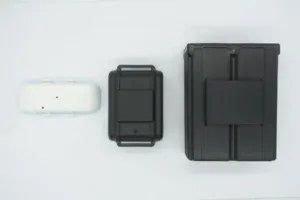



Few things are more frustrating in fleet asset management than deploying a batch of hardware, expecting years of maintenance-free operation, only to have the devices go offline within a few months. The market is saturated with labels promising a “3-year battery life” or “ultra-long standby.” Yet, when put into real-world industrial or logistics scenarios, these metrics often fall flat.
Is the manufacturer lying? Not necessarily. But they are operating under sterile laboratory assumptions. To build a highly reliable asset tracking strategy, procurement teams must understand how a low-power standby GPS tracker’s architecture operates under real mechanical and environmental loads. This guide lifts the veil on how spec sheets are calculated and outlines what it actually takes to achieve multi-year deployment.
1. The Spec Sheet Myth: Lab Testing vs. Street Reality
When a manufacturer prints “3 Years Standby” on a box, that number is derived under perfect laboratory conditions that rarely mirror field operations.
The Idle Current Fallacy
A standard long-life tracker typically features a non-rechargeable Lithium-thionyl chloride battery pack rated at roughly 5000mAh. To claim a 3-year lifespan, the factory assumes the device remains in a persistent state of deep hibernation, drawing a theoretical sleep current of around 10μA to 30μA (0.03mA).
Generic or poorly engineered hardware often suffers from unoptimized firmware or low-grade internal clocks. Consequently, these deficiencies push the actual idle sleep current closer to 1mA – 10mA. While a 10mA draw seems negligible, it represents a thousand-fold increase in parasitic drain. Therefore, this excessive current silently consumes the entire capacity of the battery bank before the asset ever deploys.
The Environmental Temperature Tax
Laboratory settings benchmark battery performance at a controlled 25°C (77°F). However, real-world industrial asset tracking exposes hardware to harsh environmental extremes. Deployments underneath flatbed trailers, inside shipping containers, or on heavy machinery must withstand winter temperatures dropping to -20°C (-4°F) and summer solar heat exceeding 60°C (140°F).
These thermal fluctuations directly impact battery chemistry and device longevity:
Extreme Cold (-20°C): Spikes internal battery resistance, drastically reducing discharge efficiency and cutting operational runtime.
Extreme Heat (60°C): Accelerates internal self-discharge rates, leading to premature power depletion and unexpected hardware offline states.
To ensure uninterrupted GPS tracking and data transmission, industrial ruggedized devices require specialized thermal management and high-grade battery cells engineered for extreme temperatures.
2. Scenario-Based Drain: How Reporting Intervals Dictate Lifespan
The single greatest contributor to battery depletion is the wireless communication cycle. Every time a tracker turns on its GNSS chip to hunt for satellites and initializes its cellular modem (4G LTE-M or NB-IoT) to upload data, it exits low-power mode and experiences a massive current spike.
[Deep Sleep Mode: ~30μA] ──> [GNSS Lock: ~40mA] ──> [Cellular Upload: ~150mA-250mA Pulse] ──> [Deep Sleep Mode]
To visualize how reporting frequency dictates hardware longevity on a standard 5000mAh power reserve, look at the tracking profile matrix below:
| Reporting Frequency | Average Device Lifespan | Primary Energy Consumer | Operational Use Case |
| 1 Ping Per Day | 3.5 to 5 Years | Natural battery self-discharge | Fixed asset storage, container shipping |
| 1 Ping Per Hour | 6 to 8 Months | Frequent modem handshake cycles | High-value supply chain tracking |
| Real-Time (Every 30s) | 3 to 5 Days | Continuous GNSS and cellular modem uptime | Active fleet dispatch, vehicle anti-theft |
Consequently, if an asset manager deploys a long-life tracker but configures the software profile to ping every hour instead of once a day, the unit will naturally drain within 6 months.
3. The Architecture of True Longevity: Low-Power Engineering
To guarantee multi-year performance in the field, true low-power standby GPS trackers must rely on an integrated ecosystem of hardware intelligence, adaptive firmware, and advanced cellular power management.
Event-Driven Sleep and Smart Wake-Up
Instead of waking up purely based on a mechanical timer, high-end tracking hardware utilizes an internal 3-axis ultra-low-power accelerometer to guide its power states.
- Static Hibernation: When the asset is parked or stationary, the device remains in a hard sleep state (<30μA draw), ignoring timer pings that waste energy.
- Motion-Triggered Wake: The moment the sensor detects physical vibration or movement above a set G-force threshold, it instantly wakes the module to log coordinates.

Network Optimization: PSM and eDRX
Modern tracking protocols utilize advanced cellular standby features built directly into modern IoT networks:
- PSM (Power Saving Mode): This acts like a deep sleep for your cell connection. The tracker tells the cell tower it is going to sleep for a long time. When it wakes up, it doesn’t need to waste energy re-negotiating its handshake with the network; it simply transmits data immediately and returns to sleep.
- eDRX (extended Discontinuous Reception): This technology allows the device to stay registered on the network while listening for incoming pages only at wide, scheduled intervals rather than constantly checking the antenna, dropping active radio power draw to negligible levels.
Conclusion: Procurement Beyond the Spec Sheet
When sourcing hardware for long-term field deployment, simply reading the “Standby Time” line item on an inquiry form is a recipe for operational failure.
Stop buying unoptimized tracking hardware that leaves your assets blind in the middle of a project. Instead, prioritize a customized low-power standby GPS trackers platform engineered with verified low-draw sleep components, motion-adaptive logic, and robust power-saving network features. Consequently, your field maintenance cycles drop, your battery projections align with reality, and your asset security remains uncompromised. Explore VSGPS’s technical tracking line today to deploy hardware built for the realities of industrial environments.