


Outdoor activities give pets more opportunities to explore, but they can also increase the risk of getting lost. For pet owners, reliable location tracking can make it easier to find an animal and understand its movements. A 4G IP67 waterproof pet GPS tracker combines mobile connectivity, location tracking, and water-resistant protection to support everyday pet safety. By understanding its key features and operating requirements, buyers can choose a tracking solution that better suits their pets and outdoor environments.
1. Why Reliable GPS Tracking Matters for Outdoor Pets
Pets may wander away during walks, outdoor play, or trips to unfamiliar places. Without reliable location information, finding them can take time, especially in large parks or unfamiliar neighborhoods. GPS tracking helps owners check a pet’s location and review its movement history, making it easier to understand where the animal has been. In addition, frequent location updates can provide useful information when a pet moves beyond its usual surroundings.
When evaluating GPS tracking devices for animals, buyers should consider more than basic positioning. The device should provide suitable location updates, dependable connectivity, and convenient access to tracking information. For example, the VSGPS P02 supports GPS, BeiDou, and LBS positioning, helping it obtain location information through multiple positioning methods. This combination can be useful when satellite positioning conditions vary, although actual accuracy depends on the surrounding environment and network availability.
2. How IP67 Protection Supports Outdoor Use
Outdoor pets may encounter rain, wet grass, splashes, and muddy environments. Therefore, protection against dust and water is an important consideration when choosing a tracking device. An IP67-rated enclosure is designed to provide dust protection and withstand specified temporary immersion conditions under standardized testing. However, this rating does not mean a device is suitable for every water-related activity or can remain underwater indefinitely.
The P02 features an IP67-rated design, making it suitable for outdoor tracking scenarios within the limits of its protection rating. Before purchasing, buyers should also confirm that the enclosure, charging interface, and seals remain properly protected during normal use. Furthermore, any damage, wear, or improper closure may affect the device’s resistance to water and dust.
When comparing products, pay attention to these practical factors:
- Water protection: Confirm the stated IP rating and its applicable testing conditions.
- Device attachment: Choose a secure mounting method that reduces the risk of loss during movement.
- Outdoor durability: Consider exposure to dirt, temperature changes, and repeated daily use.
- Maintenance: Follow the manufacturer’s cleaning and charging instructions to help maintain device condition.
3. Essential Hardware and Connectivity Specifications
A tracking device must balance compact size, battery performance, and reliable communication. For this reason, buyers should review the hardware specifications before choosing a model for daily pet monitoring. The P02 combines a rechargeable battery with 4G and 2G communication, GPS-based positioning, and a compact ABS housing. Its specifications are summarized below for easier evaluation.
| Parameter | P02 specification |
|---|---|
| Chip model | EG915U5 |
| Positioning | GPS + BeiDou + LBS |
| Water and dust protection | IP67 |
| Communication bands | LTE-FDD B2/B3/B4/B5/B7/B8/B28/B66; GSM/2G 850/900/1800/1900 MHz |
| Signal | 4G + 2G |
| Working voltage | DC 3.4–4.5 V |
| Working current | Average 60 mA at 4 V |
| Built-in battery | 700 mAh, 7.4 V polymer battery |
| Listed battery life | 5–7 days, rechargeable |
| Working temperature | -20°C to 75°C |
| Dimensions | 51 × 44 × 17 mm |
| Host weight | 34 g |
| Shell material | ABS plastic |
| Antenna | FPC antenna |
The listed battery life is a reference rather than a guarantee of identical performance in every situation. Actual runtime may vary with positioning frequency, cellular signal strength, tracking activity, and usage conditions. Therefore, buyers should clarify the testing conditions behind the stated battery life and confirm regional network compatibility before ordering.
4. Consider Electronic Fencing and App-Based Monitoring
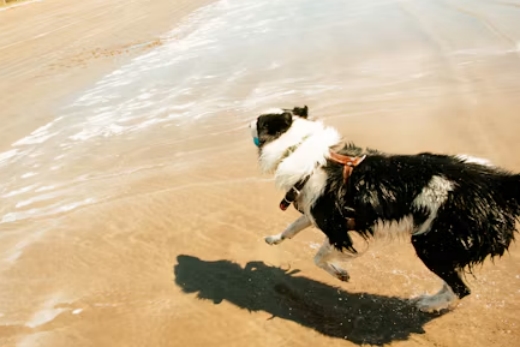
Location tracking becomes more useful when owners can access information conveniently and receive relevant alerts. Electronic fencing allows users to define a virtual area and receive notifications when a tracked pet crosses its configured boundary, provided the device and software support this function. Meanwhile, movement history can help owners review a pet’s route after an outing. These features can support more proactive monitoring, although they do not replace supervision or physical restraints where needed.
When comparing a GPS tracker with geo-fencing, check how virtual boundaries are configured and whether alerts arrive through SMS, a mobile application, or another supported platform. Similarly, a GPS tracker with mobile app support should provide a clear interface for checking location records and managing device settings. Buyers should confirm subscription fees, notification costs, application compatibility, and data access requirements before deployment.
5. Choose a Manufacturer That Fits Your Requirements
Working with an experienced pet GPS tracker manufacturer can help buyers evaluate product specifications, network compatibility, and deployment requirements. However, different products may vary in battery capacity, positioning behavior, software functions, and support options. Businesses sourcing products for distribution should therefore compare technical documentation and test samples rather than relying on headline specifications alone.
When assessing a battery-powered GPS tracker manufacturer, consider the following points:
- Battery performance: Ask how runtime was measured and which tracking settings were used during testing.
- Network compatibility: Verify supported frequency bands for the intended country or region.
- Software functions: Confirm the availability of location history, geo-fencing, and app-based monitoring.
- Environmental requirements: Check the IP rating and working temperature range against expected usage conditions.
- Supply and support: Review sample availability, order lead times, warranty terms, and technical assistance.
These checks help buyers select equipment that fits their target market and reduces avoidable issues after purchase. For wholesale or customized projects, confirming the requirements early can also make product evaluation and order planning more efficient.
Conclusion
Outdoor pet monitoring requires a practical balance of positioning, connectivity, durability, and battery performance. A 4G IP67 waterproof pet GPS tracker can help owners check location information and review movement history while offering protection suited to specified outdoor conditions. By examining network bands, battery-life testing conditions, software functions, and environmental limits, buyers can make more informed decisions. For distributors and businesses, working with a qualified manufacturer such as VSGPS can also help clarify technical requirements before samples are tested and larger orders are placed.