


Navigating complex urban environments remains a massive challenge for traditional tracking technology. Tall buildings and heavy concrete structures often block essential satellite signals. However, the rise of multi-constellation systems offers a professional solution to these dead zones. Specifically, a dual-mode GPS tracker utilizes two powerful satellite networks simultaneously. This guide explores how combined signals eliminate drift in difficult locations. We help you achieve pinpoint precision for your fleet or personal assets.
Navigating the Urban Canyon Challenge
In dense urban environments, tall skyscrapers, bridges, and overpasses create what is known as the “urban canyon,” where physical structures significantly obstruct satellite signals. As a result, reliable positioning becomes increasingly difficult in these conditions.
Limitations of Single-Mode Tracking
Traditional tracking devices typically depend on a single satellite network. Consequently, they struggle to maintain sufficient visible satellites when operating in narrow streets or heavily built-up areas. In addition, signal reflections from glass and concrete surfaces introduce interference, which often leads to significant positioning errors. Over time, this causes “position drift,” where the map display no longer matches the user’s actual location. Therefore, single-mode systems frequently fail to deliver accurate navigation during critical urban scenarios.
Dual-Mode Logic: Expanding Satellite Access
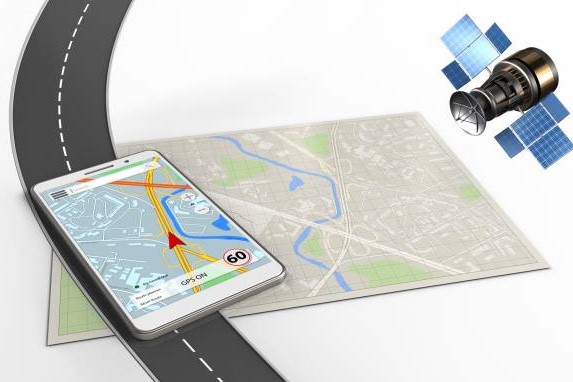
To overcome these limitations, dual-mode GPS trackers actively combine signals from both the US GPS and China’s BeiDou satellite systems.
Faster Positioning and Enhanced Stability
By integrating multiple satellite networks, the device effectively doubles the number of available satellites. Consequently, it achieves a much faster initial positioning fix after activation. Furthermore, the increased number of reference points improves overall geometric accuracy, resulting in stronger and more stable calculations. Even in challenging environments such as deep urban canyons or under elevated roadways, the tracker maintains a reliable signal lock. As a result, users benefit from smoother tracking paths and significantly improved location accuracy throughout the journey.
Comparing Single-Mode vs. Dual-Mode Performance
| Feature | Single-Mode GPS | Dual-Mode GPS + BeiDou |
| Visible Satellites | 6 – 9 typically | 15 – 22 typically |
| Position Drift | High (5 – 30 meters) | Low (< 2.5 meters) |
| Signal Reacquisition | Slow (30 – 60s) | Ultra-Fast (< 5s) |
| Tunnel Performance | Poor / Loss of signal | Stronger / Faster recovery |
Consequently, the dual-mode approach provides a significant leap in data quality. Furthermore, it ensures that your records for mileage and stops remain accurate. This is vital for professional logistics and high-value asset security. Therefore, switching to dual-mode technology protects your business from unreliable location data.
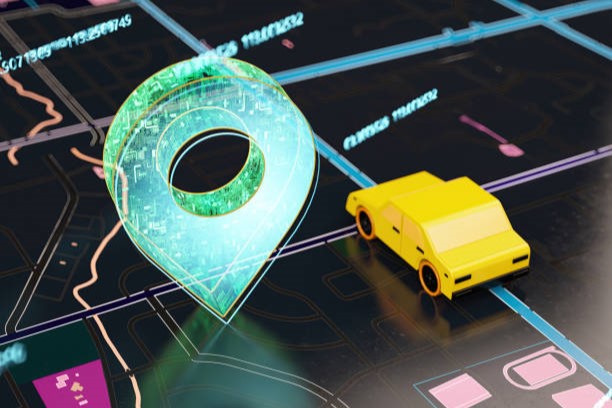
Navigating the Shadows: Bridges and Tunnels
Complex infrastructure no longer means a total loss of visibility.
- Under Overpasses: The increased satellite density prevents the signal from dropping.
- In Deep Tunnels: The device re-establishes its location instantly upon exiting.
- Near High-Rises: Multi-path interference is reduced by checking multiple signals.
Consequently, you maintain a “live” view of your assets at all times. Dual-mode GPS tracker technology represents the new gold standard for global positioning. Furthermore, modern chips consume very little power despite the extra processing. Therefore, you gain extreme accuracy without sacrificing battery life or device size.
Conclusion: Precision Without Compromise
Reliable tracking is the foundation of modern safety and logistics management.
Stop settling for jumpy, inaccurate maps that lose your signal in the city. Instead, embrace the combined power of professional GPS and BeiDou technology. Consequently, your tracking data will be as precise as your business demands. Experience the confidence of a perfectly stable location feed today. Your assets deserve a dual-mode GPS tracker that never loses its way.