


Long-term asset tracking often requires a GPS device that can operate for extended periods without frequent battery replacement or recharging. This is particularly important for equipment, vehicles, and valuable assets that remain outdoors or in locations without convenient access to power. A magnetic large battery GPS tracker addresses this challenge by combining a high-capacity rechargeable battery with flexible mounting options and multiple positioning technologies. With battery capacities reaching 20000mAh, it provides a practical option for businesses that need extended tracking intervals and reliable asset visibility.
How Does a 20000mAh Battery Extend GPS Tracking Time?
Battery capacity directly affects how long a GPS tracker can operate between charging cycles. Compared with smaller battery-powered devices, a 20000mAh model can store more energy, allowing it to support longer tracking periods under suitable operating conditions. This reduces the need for frequent maintenance, especially when tracking equipment or vehicles that operate in remote areas.
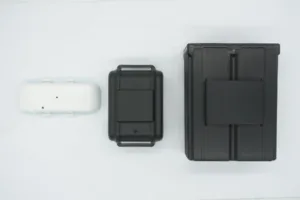
The VSGPS CW06 offers three battery configurations: 6000mAh, 10000mAh, and 20000mAh. Their specified battery life is approximately 40, 70, and 140 days, respectively. Therefore, users can select a capacity according to the expected tracking duration, reporting requirements, and maintenance schedule.
| Battery Capacity | Specified Battery Life | Suitable Applications |
|---|---|---|
| 6000mAh | 40 days | Short-term asset monitoring |
| 10000mAh | 70 days | Regular vehicle and equipment tracking |
| 20000mAh | 140 days | Extended tracking with less frequent maintenance |
However, actual battery life can vary depending on positioning frequency, network conditions, signal strength, and device usage. Consequently, businesses should consider their tracking requirements rather than selecting the largest battery solely based on capacity.
Why Magnetic Mounting Matters for Asset Tracking
Installation flexibility is another important consideration when choosing a portable GPS tracking device. Traditional wired trackers often require access to vehicle power systems, which can make installation more complicated for temporary assets or equipment that changes location frequently. In contrast, a magnetic large battery GPS tracker combines independent battery power with magnetic mounting, allowing users to attach the device to suitable metal surfaces without connecting it directly to the vehicle’s electrical system.
The CW06 features a built-in strong magnet designed for metal surface mounting. This makes it suitable for vehicles, trailers, machinery, shipping containers, and other metal assets that require flexible tracking arrangements. Additionally, its compact ABS housing helps accommodate different installation positions while maintaining a practical balance between battery capacity and device size.
Before installation, users should consider several factors:
- Mounting surface: Choose a clean, flat metal surface that provides sufficient magnetic contact.
- Positioning environment: Avoid locations that significantly obstruct satellite signals.
- Physical protection: Secure the device in a position where accidental impact or removal is less likely.
- Accessibility: Consider whether the device needs to be removed periodically for charging or inspection.
These considerations help improve installation stability while maintaining convenient access for routine maintenance.
IP65 Waterproof Protection for Outdoor Applications
Outdoor assets frequently encounter rain, dust, moisture, and changing weather conditions. Therefore, environmental protection plays an important role in determining whether a GPS tracker can operate reliably outside a controlled indoor environment.
The CW06 features an IP65-rated housing, which provides protection against dust ingress and water jets from different directions under the specified test conditions. This makes it suitable for many outdoor tracking applications, including trailers, construction equipment, logistics vehicles, and movable machinery.
Furthermore, its operating temperature range of -20°C to +75°C supports use across a variety of environmental conditions. Nevertheless, IP65 protection does not mean the device is suitable for underwater use or prolonged immersion. Users should also ensure that the housing remains properly sealed during installation and routine maintenance.

Multi-System Positioning and Wireless Connectivity
Battery capacity alone does not determine tracking performance. Positioning accuracy and network availability also influence how effectively a GPS tracker can report asset locations. The CW06 integrates GPS, BeiDou, AGPS, and LBS positioning technologies, while Wi-Fi positioning provides an additional location reference for supported environments.
For wireless communication, the device supports 2G and 4G connectivity, with LTE Cat M1 and GSM frequency configurations available. Its supported network bands include LTE bands B1, B2, B3, B4, B5, B8, B12, B13, B14, B18, B19, B20, B25, B26, B27, B28, B66, and B85, together with GSM bands B2, B3, B5, and B8. Buyers should check regional carrier compatibility before deployment, as network availability varies between countries and operators.
Additional monitoring functions improve its practical value:
- Vibration alarm: Detects abnormal movement and helps identify unexpected asset activity.
- Electronic fence: Sends notifications when an asset enters or leaves a predefined geographical area.
- Low-voltage alarm: Alerts users when battery voltage reaches an abnormal level.
- Playback: Provides access to up to six months of historical tracking records.
- Battery display: Allows users to check battery status through the mobile application.
Together, these capabilities help businesses monitor asset movement and identify unusual activity without relying on continuous wired power.
How to Choose the Right Large Battery GPS Tracker
Selecting a suitable device depends on the asset type, expected tracking duration, installation environment, and network coverage. A large battery capacity GPS tracker is particularly useful when frequent charging is inconvenient or when assets remain unattended for extended periods.
For different tracking requirements, buyers should evaluate the following factors:
- Battery capacity: Compare 6000mAh, 10000mAh, and 20000mAh options according to the required operating period.
- Mounting method: Check whether magnetic adsorption is suitable for the target asset.
- Environmental protection: Confirm the IP rating and operating temperature range.
- Network compatibility: Verify LTE and GSM frequency support in the destination market.
- Positioning functions: Consider GPS, BeiDou, AGPS, LBS, and Wi-Fi positioning requirements.
- Management platform: Review alarm notifications, historical playback, and battery monitoring features.
When evaluating a battery-powered GPS tracker manufacturer, buyers should also consider product reliability, technical documentation, and available configuration options. Similarly, a Wi-Fi GPS tracker manufacturer should provide clear information about Wi-Fi positioning capabilities, while a GPS tracker with geo-fencing manufacturer should support practical geographical boundary management and notification functions.
Conclusion
Extended tracking duration can reduce maintenance requirements and make asset monitoring more convenient, particularly for equipment and vehicles without permanent power connections. The VSGPS CW06 combines magnetic mounting, multiple positioning technologies, IP65 protection, and battery configurations of up to 20000mAh to support different tracking requirements. For remote equipment and unattended vehicles, a magnetic large battery gps tracker also reduces the need for frequent access to the asset for recharging. By matching battery capacity, installation conditions, and network compatibility to the intended application, businesses can build a more practical and efficient asset tracking solution.